How To Play Aviator Game (India) | Guide, Rules, Tips & Demo
A practical, step-by-step guide to playing Aviator safely and confidently in India.
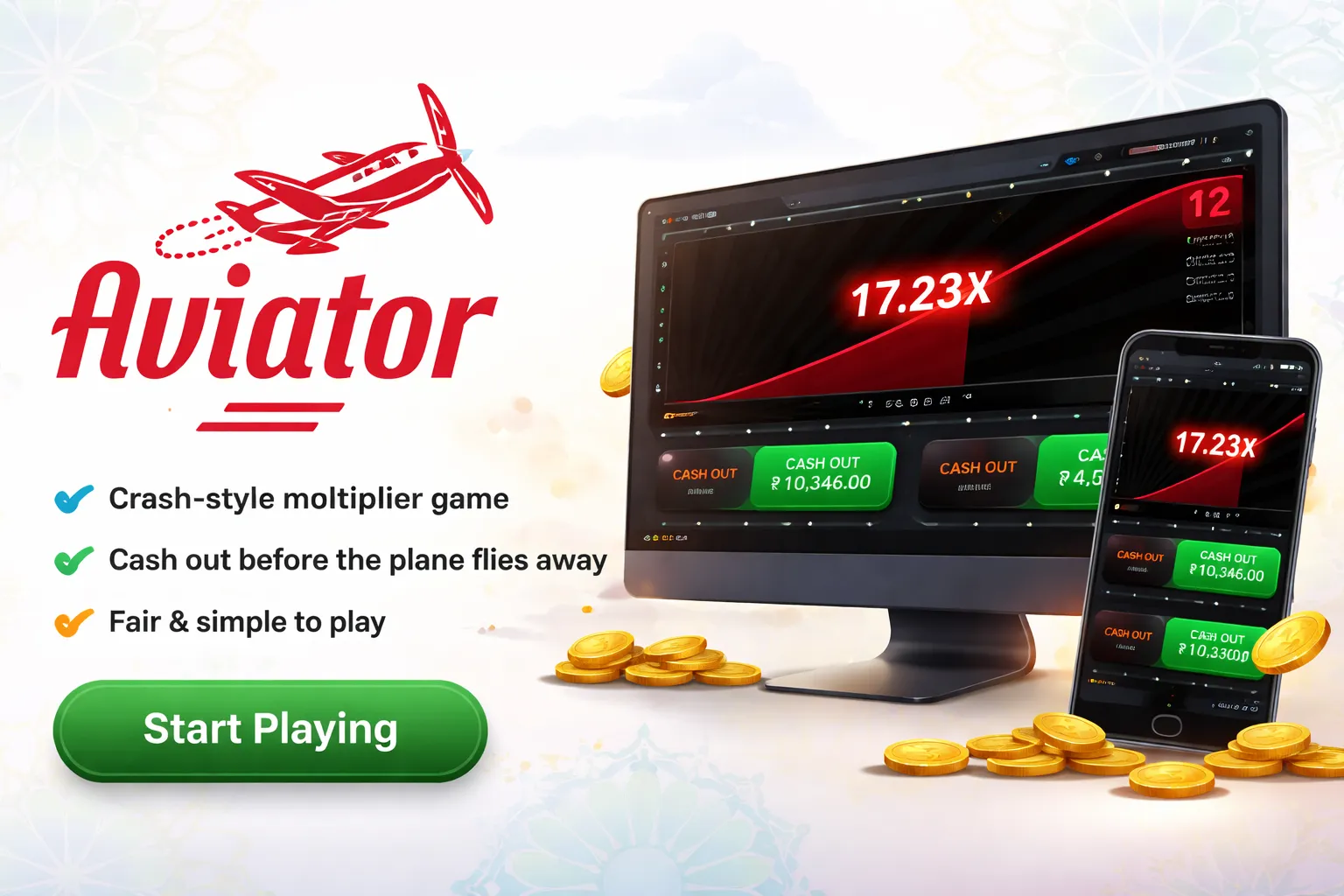
What Aviator is
A fast crash-style game where you cash out before the plane flies away.
What this site gives you
A clean play flow, a quick rules table, and practical practice steps.
Who this is for
New players, returning players, and anyone who wants fewer mistakes.
How the Aviator round works
Aviator is a simple idea with a lot of small details. A round starts, a multiplier begins rising, and the round can end at any moment. Your goal is to place a stake before the round starts and cash out at a multiplier you are comfortable with. If the round ends before you cash out, that stake loses. If you cash out before it ends, your payout is your stake multiplied by the cashout multiplier (minus any platform fee where applicable).
Most new players lose not because the core mechanic is complicated, but because they misunderstand timing. They wait for “just a little more” without a plan, or they do not notice auto-cashout settings, connection delays, or the difference between manual cashout and an automatic target. The fastest way to improve is to treat Aviator like a decision game: decide your stake, decide your exit, and execute consistently.
Start here: a beginner-friendly play flow
If you are in India, you will often see common account and deposit patterns such as mobile-number sign-in, OTP verification, and UPI. The exact screens vary by app or site, but the sequence is usually similar:
- Create an account or sign in using mobile number and OTP.
- Set a small test deposit and confirm your balance updates correctly.
- Open Aviator, check your stake controls, and locate cashout/auto-cashout.
- Play practice rounds (or low stakes) to understand pacing and timing.
- Keep sessions short, track results, and stop when you hit your limit.
When you are ready, open the dedicated step-by-step page: How to Play. It contains a practical checklist you can follow from start to finish.
Rules and payouts in plain English
The rules of Aviator are short, but the consequences of each choice are not. Understanding “what is guaranteed” versus “what is variable” matters:
- Every round can end early. There is no safe multiplier.
- Cashout timing is your responsibility (manual or auto).
- Stake sizing controls your risk more than your multiplier does.
- Over many rounds, variance will dominate short-term outcomes.
Use the quick table page to keep the logic clear: Rules & Payouts.
Practical strategy: what actually helps beginners
Strategy in Aviator is less about predicting the next multiplier and more about controlling your decisions. Beginners typically benefit from three practical habits:
- Set a cashout target before each round. Decide your exit and do not negotiate with yourself mid-round.
- Use smaller stakes while learning. If a loss makes you emotional, the stake is too large for your current comfort level.
- Define session limits. Choose a time limit and a loss limit before you start.
When you want structured tips with examples, use Strategies & Tips.
Demo and practice matters more than you think
Many players skip practice because the game looks easy. In reality, practice is where you learn to execute. You learn where the cashout button sits, how your connection behaves, and how you react when a round ends quickly. A “good practice session” is not the one where you win. It is the one where you follow your plan without panic or impulsive changes.
Use the practice page when you want a structured routine: Demo & Practice.
Common mistakes that cost money
These are patterns that show up again and again:
- Chasing losses. Increasing stake rapidly to “recover” is one of the fastest ways to break your limits.
- Changing targets constantly. Without consistency, you cannot evaluate what works for you.
- Ignoring latency. If your cashout clicks are delayed, you need to adjust expectations and settings.
- Believing in “sure rounds”. There are no guaranteed outcomes.
Responsible gaming (18+)
Aviator is fast and can feel intense. Keep it controlled. Play only if you are 18+. Do not use money meant for essentials. If you notice that you are playing longer than planned, increasing stakes to cope with losses, or thinking about the game constantly, stop and take a break. You can also read the dedicated page: Responsible Gaming.
Next steps
Start with the step-by-step guide, then keep the rules table handy, and finally review strategies only after you can follow a basic plan without drifting. Use the FAQ if a term or setting is unclear.